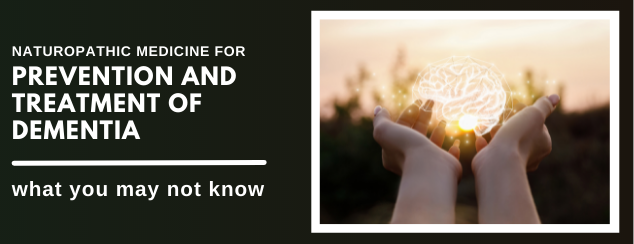
In 2019, more than 50 million people suffered from some sort of dementia.
By the year 2050, it is estimated that number will triple to 150 million.
These statistics are staggering (there are many cases that go undiagnosed in which these numbers are reflective) and possibly numbers you haven’t seen before. I hadn’t either until I began researching this field more intensely.
This interest led me to further my knowledge with Apollo Health’s ReCODE 2.0 training, which focuses on the Bredesen protocol for prevention and treatment of cognitive decline.
And this newfound knowledge?
It’s made me realize that naturopathic medicine cannot only be therapeutic through one’s journey with dementia, but it also may prevent it.
The traditional approach to diagnosing dementia is a check list of criteria (signs and symptoms) that needs to be met. Unfortunately, diagnosis usually occurs in a later stage and, while treatable with the Bredesen protocol, prevention is easier and always better.
Alzheimer’s disease as well as other forms of dementia can take up to 20 years to develop from onset! That is a lot of time that we could be intervening. We now know that there are sensitive early signs that point to future cognitive decline in which prevention and prompt intervention are most effective.
Causes of cognitive decline
In addition to genetics (such as having the APOE4 gene subtype), dementia and its associated diseases are largely influenced by environmental factors.
Some of these may include:
– previous or recent traumatic brain injury (such as concussion)
– unhealthy food choices and metabolic issues
– leaky gut
– chronic inadequate sleep
– low levels of movement or activity
– mycotoxin illness (fungi organisms that live on harvested crops)
– exposure to pesticides
– heavy metal toxicity (ie: mercury, lead)
– certain viral infections such as HSV 1
– sleep issues
– hormonal imbalances
Each of these factors can cause brain inflammation which over time, may lead to brain disease.
Early symptoms of dementia
Some of things to pay attention to, even if you have strategies to overcome these, include:
– difficulty remembering names and faces
– occasional trouble word finding
– occasional disorientation with navigation
– difficulty remembering dates and appointments
No matter what age (although, typically 45 and older), these symptoms should be checked by a medical professional.
Testing
I recommend at age 45 a screening for risk for cognitive decline be performed.
The brain is just as important as other systems in the body and knowing what your risks are and what to do about it can be key to a successful outcome.
The assessment, called a cognoscopy, can be scheduled through my office. It includes blood work, a cognitive skill test, and possible MRI (for those showing symptoms). Learn more about it here.
The results of these tests are then assessed, and a report generated through Apollo Health, for a customized analysis of your risk as well as what areas would be most beneficial for you to concentrate on to reduce inflammation (such as change in diet and/or elimination of certain environmental toxins).
It can also provide a well-rounded, effective, and holistic approach to treatment for those already suffering from dementia.
Cost
While the cost for screening is relatively low, it is still a voluntary expense. Additional charges can add up when it comes to prevention and early treatment, however, when considering the amount needed for 24 hour care in a long-term facility, the early investment doesn’t even come close.
If you live in the Boulder or Denver metro area and:
– are experiencing symptoms of cognitive decline
– have a family history of dementia
– are 45 years of age or older
– are a caregiver for someone with dementia
a cognoscopy may make a significant difference in preventing and/or treating brain decline.
To discuss this testing and treatment more in-depth or to schedule, please call me at (720) 340-0193 or contact me here.
REFERENCES:
Morovic S, et al. J Med Life. 2019 Oct-Dec;12(4):332-337.
https://www.apollohealthco.com
https://www.parkinson.org/understanding-parkinsons/10-early-warning-signs